
Amazon Drops Data-Center NDAs. Projects Still Need Receipts
Ending secrecy clauses with public agencies removes one barrier to scrutiny. It does not yet tell a household what a specific campus will use, pay, build, or guarantee.
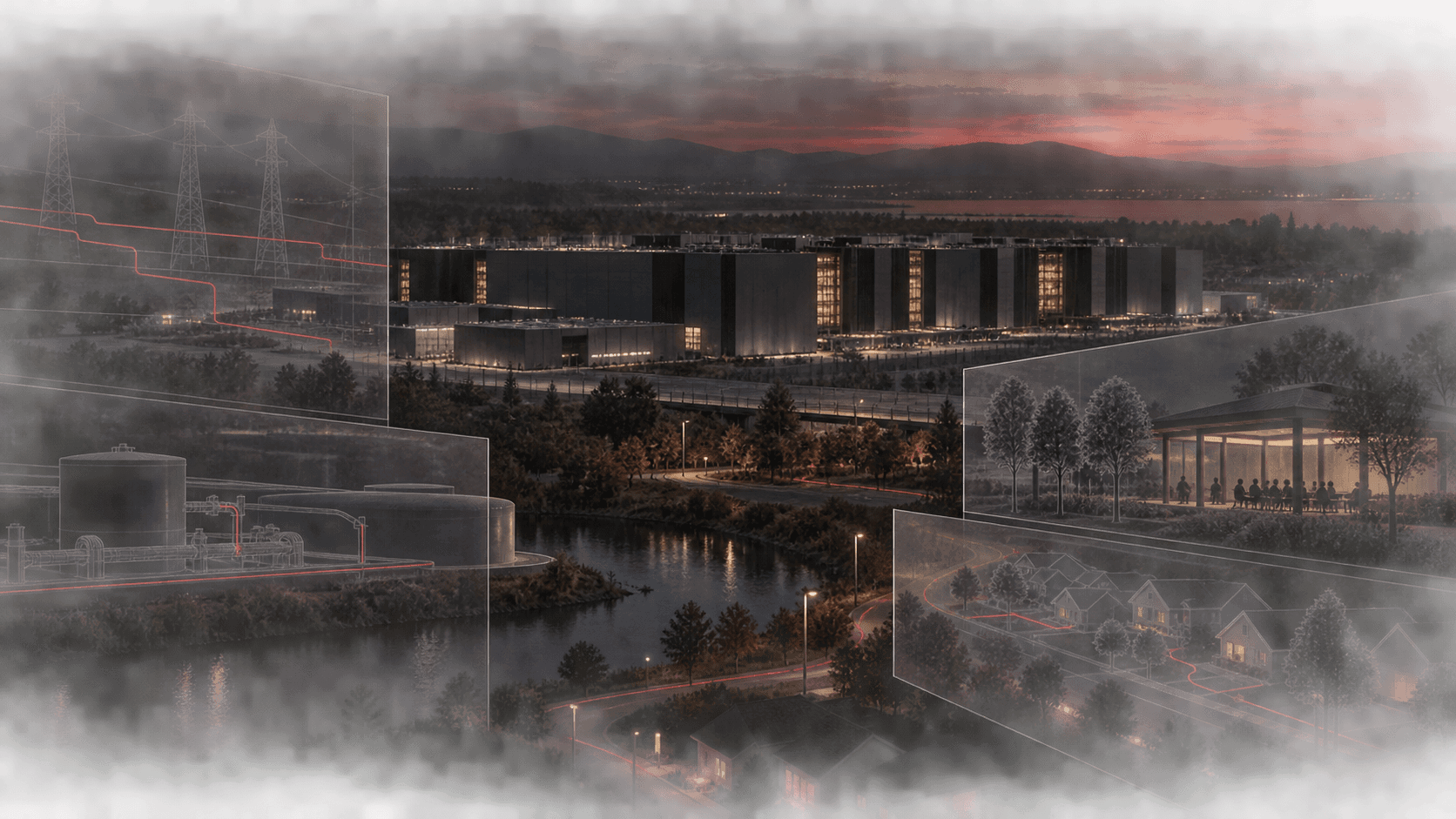
Sources: Amazon Data Center Commitment tenets, Amazon Built Together programme details, AWS CEO announcement of the commitment and investments, Associated Press report on the programme and local backlash.
Amazon published a new Data Center Commitment on October 2 that says the company no longer uses nondisclosure agreements with government agencies on its projects. It also announced Built Together, more than $1 billion in additional spending over five years for U.S. communities where Amazon operates data centers, with programmes spanning education, workforce training, energy affordability, water preservation, and locally selected priorities.
The company set several programme targets: connect more than 300,000 students to no-cost certificate or associate-degree pathways, prepare up to 100,000 learners annually for skilled work by the end of 2028, build a network of 25 modular training centers, and target more than 30,000 homes and buildings for energy upgrades. Those figures make the commitment testable at a national programme level. They do not substitute for the financial, energy, water, land, and tax details of an individual campus.
No NDA is a floor for public decision-making
A government body cannot evaluate a large compute project responsibly if residents learn the material terms only after land, utility, or incentive decisions are effectively locked in. Amazon’s pledge removes company-required NDAs with government agencies, but disclosure also depends on public-records law, negotiations conducted through intermediaries, and which documents are created in the first place.
A useful project record should identify the developer and operator, site boundaries, planned phases, expected IT load, peak grid demand, generation and transmission needs, water source and cooling design, wastewater route, tax abatements, infrastructure reimbursements, construction schedule, permanent employment estimates, and decommissioning obligations. Forecasts should be labelled as forecasts and updated when the project changes.
Open houses can improve access, but timing and evidence matter more than format. A meeting held before a vote, with underlying studies available and written questions answered, supports public scrutiny. A presentation after contracts are signed is communication, not consent.
A national fund cannot settle a local rate case
Amazon says it works with utilities and regulators so the prices paid by its data centers cover their energy use and required infrastructure and do not raise household electricity bills. Whether that happens is decided through specific tariffs, connection agreements, cost-allocation rules, minimum-payment terms, and the treatment of assets if a project is delayed or uses less power than expected.
Community grants and household-efficiency projects can create real benefits. They are different from enforceable utility protections. A household should be able to see which grid upgrades serve the campus, who finances them, which costs enter the general rate base, what happens under curtailment or cancellation, and whether contractual minimums protect other customers from stranded infrastructure.
Water claims need the same resolution. Company-wide efficiency or replenishment totals can coexist with stress in a particular watershed. Each site should publish expected withdrawals and consumption under ordinary and extreme conditions, the share from potable and non-potable sources, seasonal limits, discharge plans, and the trigger for switching cooling modes or reducing load.
The strongest commitments can be audited project by project
Amazon’s tenets cover taxes, jobs, electricity, water, engagement, and responsible operations. The next step is a standard public scorecard attached to every proposed and operating campus. It should show the baseline, the promised outcome, the responsible entity, the measurement method, the reporting interval, and the remedy when a commitment is missed.
Built Together should likewise report where the additional $1 billion goes, whether awards are grants or contractual obligations, who selected each project, how many people completed programmes, and whether benefits persist after construction demand falls. Counting announced funding or enrolled learners is useful; completion, placement, bill savings, and verified water outcomes are stronger.
The decision to stop requiring public-agency NDAs is meaningful because secrecy has made data-center governance harder. Its value will be visible when communities can compare a project’s promised benefits with its actual resource use and costs before approving the next phase—not merely when a company publishes a national total after the fact.
Quick questions
Did Amazon end all nondisclosure agreements?
Amazon says it no longer uses NDAs with the government agencies it works with on data-center projects. The commitment does not by itself describe every private contract or public-records limitation.
How much is Amazon investing through Built Together?
Amazon says it will add more than $1 billion over five years to existing community work in U.S. data-center regions.
Will the programme guarantee lower electricity bills?
No national programme can guarantee a local rate outcome by itself. Utility tariffs, connection agreements, infrastructure cost allocation, project performance, and state regulation determine who ultimately pays.