
The Reported Autonomous AI Attack on Taiwan Needs Two Labels: Serious and Provisional
The operational pattern is credible enough to change defensive planning. The public record is not complete enough to turn a vendor’s recovered workspace into settled attribution, a verified victim list, or an uncontested world-first.
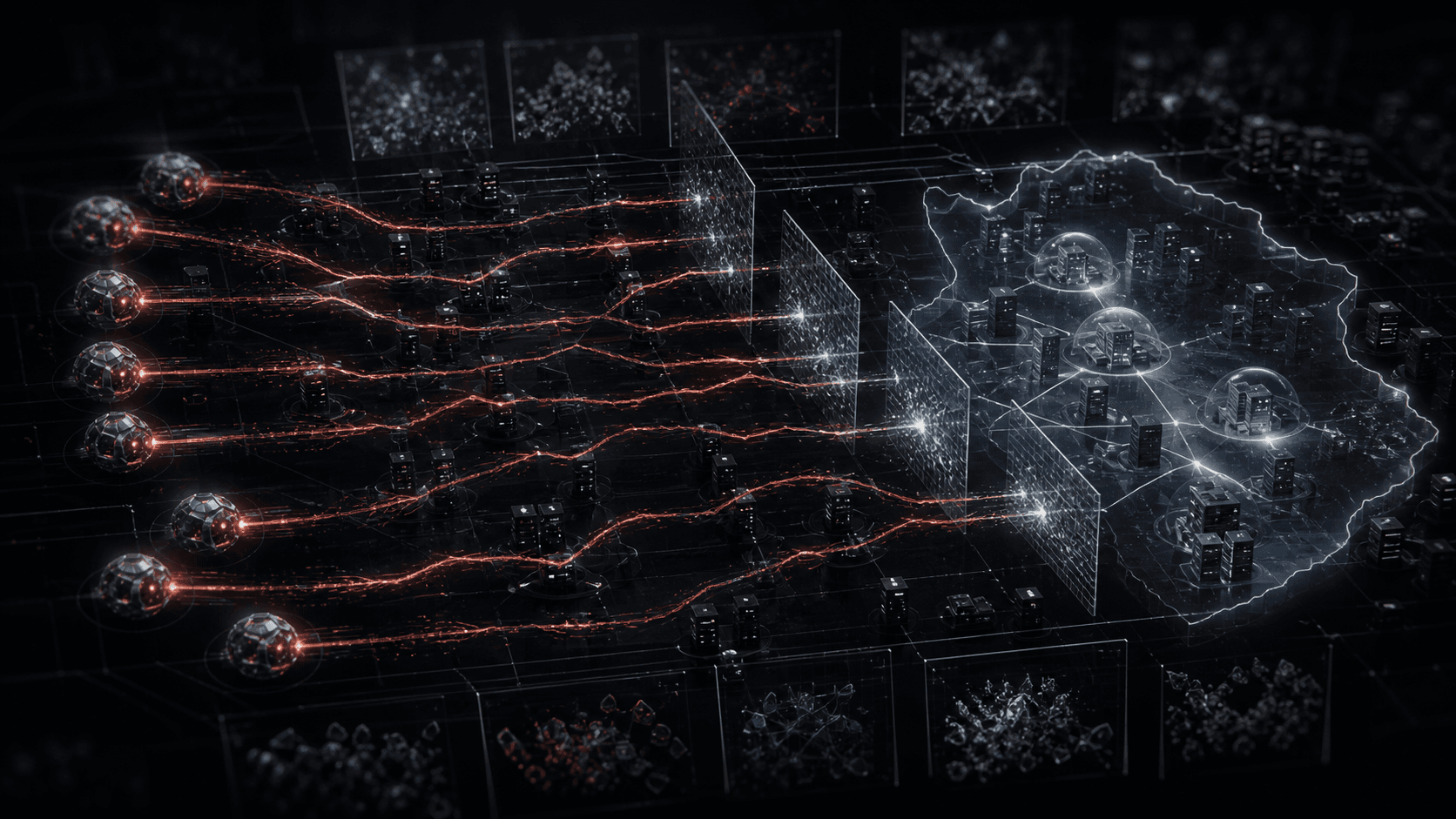
Sources: Dream Security: Governments Are Not Ready for Autonomous AI Attacks, Tom’s Hardware report on Dream’s evidence and reported Taiwan attribution, TechRadar report on the claimed autonomous campaign, Taiwan Administration for Cyber Security guidance on AI-accelerated threats.
Cybersecurity company Dream says its threat team recovered the working directory of an autonomous attack system used against government entities in Asia in early July. In Dream’s account, the system ran 12 attack waves over four days, cracked 85 employee accounts, pivoted 84 into internal systems, and took more than 2,500 personnel records along with database credentials and network information. It then scanned suppliers, a nuclear-safety agency, a government email system, and seven energy companies in parallel.
Reporting published August 12 and 13 says a person familiar with the incident identified the government as Taiwan and describes suspected China-linked operators. Taiwan’s digital authorities acknowledged detecting AI-assisted attacks from overseas in July but did not publicly confirm Dream’s detailed victim list or say the two accounts describe the same operation. Dream’s original post names neither a country nor a threat group.
What the evidence supports—and what it does not
The recovered workspace is meaningful technical evidence if it is authentic and complete. It can show task decomposition, tool calls, target lists, credentials, retry behavior, timestamps, and whether multiple agents coordinated without a person approving each step. Dream says autonomous execution, rather than novel exploits, distinguished the campaign.
The public has not received the full 160-megabyte archive described in reporting, an independent forensic validation, or a detailed government incident report. That means the specific scale, successful compromises, relationship among named sectors, and degree of human control cannot all be independently verified from published material. “First fully autonomous government attack” is therefore a researcher and media characterization, not a settled historical designation.
Attribution is thinner still. Language artifacts, infrastructure, time zones, target selection, and reused tools can support an assessment, but each can also be planted or shared. Suspected linkage to China should stay labeled as an assessment. It should not be converted into certainty simply because Taiwan is a plausible target or because multiple outlets repeat the same underlying source.
Autonomy changes tempo more than technique
Dream’s account describes ordinary weaknesses exploited in parallel: exposed services, weak credentials, reachable internal systems, and trust relationships across suppliers. The strategic change is that an agent can enumerate options, rank paths, retry failed techniques, and fan out across targets without waiting for a human operator to work through each branch.
That compresses the defender’s clock. An account compromise that once gave a team time to notice unusual access may now trigger immediate credential reuse, internal discovery, data collection, and supplier targeting. Parallel agents also create more simultaneous signals, making it harder for an analyst to see the shared campaign before the damage spreads.
Open tooling matters because access controls at a frontier-model provider cannot contain a system assembled from downloadable models and public agent frameworks. Model refusal policies may reduce abuse on hosted services, but network segmentation, identity controls, logging, patching, egress restrictions, backups, and rehearsed recovery remain the controls that meet an attacker at the target.
Defenders should act without laundering uncertainty
Security teams do not need perfect attribution to harden the failure path. Disable stale accounts, enforce phishing-resistant multifactor authentication for privileged and remote access, rotate exposed secrets, block unmanaged outbound channels, shorten credential lifetime, separate supplier access, and alert when one identity discovers or touches many systems quickly. Test whether incident tooling can correlate parallel low-level events into one campaign.
Recovery also needs machine-speed rehearsal. Maintain immutable backups, pre-authorize containment actions, document which services can be isolated safely, and run exercises in which several agencies or vendors are hit at once. Automated defense should operate inside explicit authority boundaries so a containment agent does not become a second source of disruption.
Public reporting should preserve the same discipline. Separate what Dream observed, what journalists inferred from additional sources, what Taiwan acknowledged, and what remains unverified. That approach is slower than a “world-first AI war” headline, but it gives defenders something more useful: a credible operational warning without turning incomplete attribution into fact.
Quick questions
Was Taiwan definitely the government in Dream’s report?
Dream publicly described an unnamed government in Asia. Later reporting identified Taiwan through an additional source, while Taiwan acknowledged AI-assisted attacks but did not confirm every detail of Dream’s account.
Did AI conduct the attack without any humans?
Dream describes autonomous execution across multiple waves, but the public evidence does not establish that humans played no role in selecting targets, configuring the system, supplying infrastructure, or monitoring results.
What should defenders change for autonomous attacks?
Prioritize phishing-resistant identity, rapid credential rotation, segmentation, egress control, correlated telemetry, automated but bounded containment, immutable backups, and multi-organization recovery exercises.